
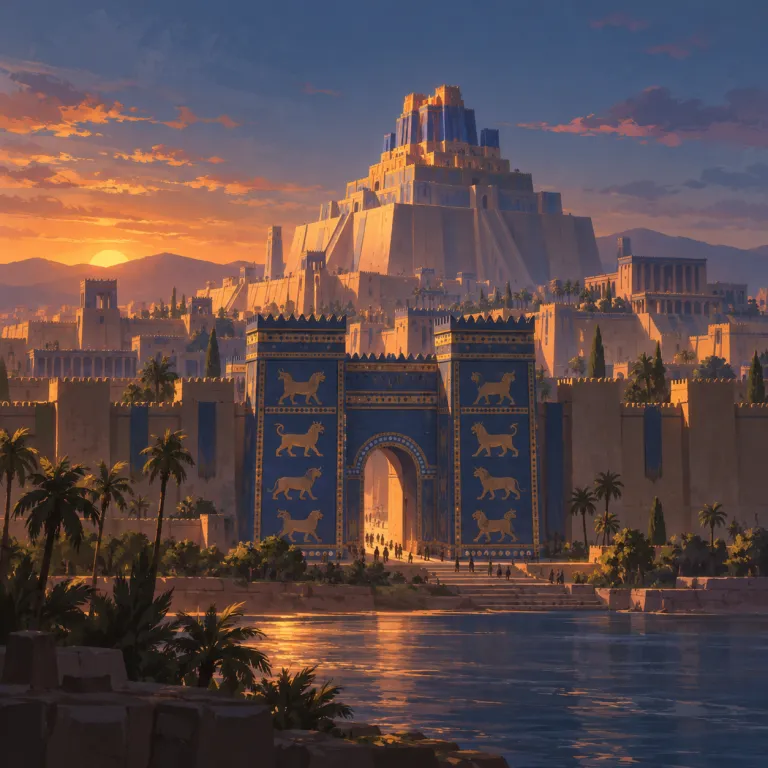
The place
Babylon, also known as Babel, was an ancient city located in Mesopotamia (modern-day Iraq) along the Euphrates River. It served as the capital of the Babylonian Empire, one of the most powerful empires in the ancient Near East. The city first appears in the Bible in Genesis 10:10 as part of Nimrod's kingdom and is identified as the location of the Tower of Babel (Genesis 11:9).
Throughout the Old Testament, Babylon is mentioned as a major political and military power, often in conflict with Israel and Judah. The city became the dominant power in the region under King Nebuchadnezzar II, who conquered Judah, destroyed Jerusalem and the Temple, and exiled many Jews to Babylon (2 Kings 24-25; 2 Chronicles 36). The Babylonian captivity lasted for 70 years, as prophesied by Jeremiah (Jeremiah 25:11; 29:10).
Several Old Testament prophets, including Isaiah, Jeremiah, and Ezekiel, prophesied against Babylon, foretelling its eventual downfall (Isaiah 13-14; Jeremiah 50-51; Ezekiel 26-32). In these prophecies, Babylon is sometimes referred to by other names, such as Sheshak (Jeremiah 25:26; 51:41), Merathaim (Jeremiah 50:21), and Pekod (Jeremiah 50:21; Ezekiel 23:23), which are believed to be code names or references to specific regions within the Babylonian Empire.
After the Persians conquered Babylon in 539 BC, the city gradually declined in importance. In the New Testament, Babylon is used symbolically to represent worldly power and opposition to God (Revelation 14:8; 16:19; 17:5; 18:2, 10, 21).
Where this place lies
Where the Bible names it
80 chapters, 268 verses