
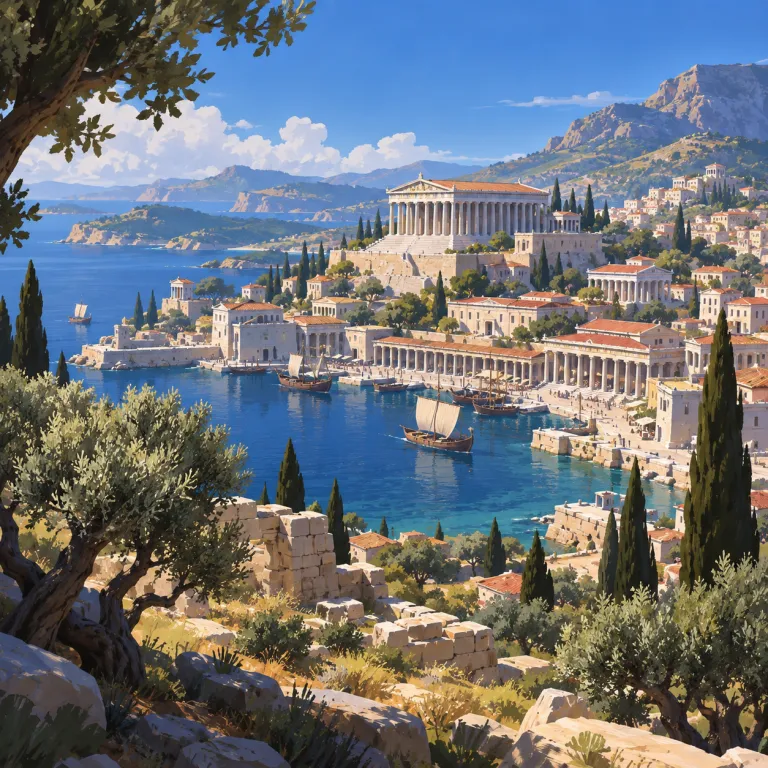
The place
Asia, as mentioned in the New Testament, refers to a Roman province that encompassed the western part of Asia Minor, with Ephesus as its capital. It should not be confused with the modern continent of Asia.
In Acts, Asia is mentioned several times in the context of Paul's missionary journeys. Jews from Asia were present in Jerusalem on the day of Pentecost (Acts 2:9), and some belonged to the Synagogue of the Freedmen, who disputed with Stephen (Acts 6:9). Paul traveled through the region of Phrygia and Galatia, having been forbidden by the Holy Spirit to preach in Asia (Acts 16:6). Later, Paul spent two years in Ephesus, and all the residents of Asia heard the word of the Lord (Acts 19:10). Demetrius, a silversmith who made shrines of Artemis, stirred up a crowd against Paul, fearing that Paul's preaching would undermine the worship of Artemis, whom all Asia revered (Acts 19:26-27).
In his farewell address to the Ephesian elders, Paul mentions that he had faced plots by the Jews from Asia (Acts 20:18-19). When Paul visited the temple in Jerusalem, Jews from Asia stirred up the crowd against him (Acts 21:27). During Paul's voyage to Rome, the ship stopped at Myra in Lycia, where an Alexandrian ship was found sailing for Italy (Acts 27:2).
The churches in Asia are mentioned in the opening of 1 Peter (1 Peter 1:1) and Revelation (Revelation 1:4, 11). Paul also sends greetings to Prisca and Aquila, and to the church in their house, the first fruits of Asia (1 Corinthians 16:19; Romans 16:5). In 2 Timothy, Paul writes that all those in Asia had turned away from him (2 Timothy 1:15).
These references to Asia in the New Testament provide insight into the early spread of Christianity and the challenges faced by the apostles in this region of the Roman Empire.
Where this place lies
Where the Bible names it
14 chapters, 21 verses