
New King James Version
Judges 1:21
21But the children of Benjamin did not drive out the Jebusites who inhabited Jerusalem; so the Jebusites dwell with the children of Benjamin in Jerusalem to this day.
Judges 1:21 in other versions
- King James Version (KJV)And the children of Benjamin did not drive out the Jebusites that inhabited Jerusalem; but the Jebusites dwell with the children of Benjamin in Jerusalem unto this day.
- New International Version (NIV)The Benjamites, however, did not drive out the Jebusites, who were living in Jerusalem; to this day the Jebusites live there with the Benjamites.
- English Standard Version (ESV)But the people of Benjamin did not drive out the Jebusites who lived in Jerusalem, so the Jebusites have lived with the people of Benjamin in Jerusalem to this day.
- New Living Translation (NLT)The tribe of Benjamin, however, failed to drive out the Jebusites, who were living in Jerusalem. So to this day the Jebusites live in Jerusalem among the people of Benjamin.
Context of Judges 1:21
19So the Lord was with Judah. And they drove out the mountaineers, but they could not drive out the inhabitants of the lowland, because they had chariots of iron. 20And they gave Hebron to Caleb, as Moses had said. Then he expelled from there the three sons of Anak. But the children of Benjamin did not drive out the Jebusites who inhabited Jerusalem; so the Jebusites dwell with the children of Benjamin in Jerusalem to this day. 22And the house of Joseph also went up against Bethel, and the Lord was with them. 23So the house of Joseph sent men to spy out Bethel. (The name of the city was formerly Luz.)
Read all of Judges 1Judges 1:21 word by word
וְאֶת־הַיְבוּסִי֙ יֹשֵׁ֣ב יְרֽוּשָׁלִַ֔ם לֹ֥א הוֹרִ֖ישׁוּ בְּנֵ֣י בִנְיָמִ֑ן וַיֵּ֨שֶׁב הַיְבוּסִ֜י אֶת־בְּנֵ֤י בִנְיָמִן֙ בִּיר֣וּשָׁלִַ֔ם עַ֖ד הַיּ֥וֹם הַזֶּֽה׃ סRead the interlinear
Words taken from the KJV.
- And the childrenבֵּןbên · son: descendant/peopleH1121
- of Benjaminבִּנְיָמִיןbinyâmîyn · BenjaminH1144
- did not drive outיָרַשׁyârash yârêsh · to possess: takeH3423
- the Jebusitesיְבוּסִיyebûsîy · JebusiteH2983
- that inhabitedיָשַׁבyâshab · to dwellH3427
- Jerusalemיְרוּשָׁלִַ֫ם, יְרוּשְׁלֵםyerûshâlaim yerûshâlayim · JerusalemH3389
- unto this dayיוֹםyôm · day: todayH3117
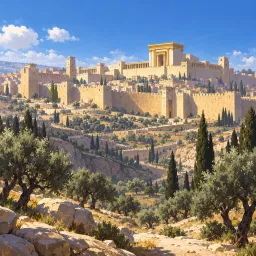
People and places in Judges 1:21

Cross-references for Judges 1:21
- Judges 19:10However, the man was not willing to spend that night; so he rose and departed, and came opposite Jebus (that is, Jerusalem). With him were the two saddled donkeys; his concubine was also with him.
- Joshua 15:63As for the Jebusites, the inhabitants of Jerusalem, the children of Judah could not drive them out; but the Jebusites dwell with the children of Judah at Jerusalem to this day.
- Joshua 18:11Now the lot of the tribe of the children of Benjamin came up according to their families, and the territory of their lot came out between the children of Judah and the children of Joseph.
- 2 Samuel 5:6And the king and his men went to Jerusalem against the Jebusites, the inhabitants of the land, who spoke to David, saying, “You shall not come in here; but the blind and the lame will repel you,” thinking, “David cannot come in here.”
Commentaries on Judges 1:21
- Adam Clarke Bible Commentary · v. 21The Jebusites dwell with the children of Benjamin - Jerusalem was situated partly in the tribe of Judah, and partly in the tribe of Benjamin, the northern part belonging to the latter tribe, the southern to the former. The Jebusites had their strongest position in the part that belonged to Benjamin, and from this place they were not wholly expelled till the days of David. See the notes on Judges 1:8. What is said here of Benjamin is said of Judah, Joshua…Read the comment
- Barnes’ Notes on the Bible · v. 21This verse is nearly identical with Joshua 15:63, except in the substitution of Benjamin for Judah. Probably the original reading Judah was altered in later times to Benjamin, because Jebus was within the border of Benjamin, and neither had the Benjamites expelled the Jebusites.Read the comment
- Matthew Henry Concise Commentary · v. 21-36Verses 21-36 The people of Israel were very careless of their duty and interest. Owing to slothfulness and cowardice, they would not be at the pains to complete their conquests. It was also owing to their covetousness: they were willing to let the Canaanites live among them, that they might make advantage of them. They had not the dread and detestation of idolatry they ought to have had. The same unbelief that kept their fathers forty years out of Canaan…Read the comment
- Tyndale Open Study Notes · v. 21The tribe of Benjamin produced many heroes, like Ehud and Saul, but it also showed great unfaithfulness to the covenant, unlike Judah (see Judges 20:18). Like Judah in its first battle (Judges 1:4–8), Benjamin faced strong people in a large city but chose to share the city with them. There is no mention of the Lord's presence (compare Judges 1:19, 22). The Jebusite city stayed under Canaanite control until David's time. The phrase "to this day" highlights…Read the comment
- Jamieson–Fausset–Brown Commentary · v. 17-2917-29. And Judah went with Simeon his brother--The course of the narrative is here resumed from Jud 1:9, and an account given of Judah returning the services of Simeon (Jud 1:3), by aiding in the prosecution of the war within the neighboring tribes. slew the Canaanites that inhabited Zephath--or Zephathah (2Ch 14:10), a valley lying in the southern portion of Canaan. Hormah--destroyed in fulfilment of an early vow of the Israelites (see on Nu 21:2). The…Read the comment
Topics related to Judges 1:21
In the dictionaries
Commentaries on Judges 1
- Adam Clarke Bible Commentary
- Barnes’ Notes on the Bible
- Matthew Henry Concise Commentary
- Tyndale Open Study Notes
- Jamieson–Fausset–Brown Commentary
- Rashi on Tanakh
- Keil & Delitzsch Commentary
- John Wesley’s Notes
- Kingcomments
- Matthew Henry’s Complete Commentary
- Matthew Henry’s Modern English Commentary
- Scofield Reference Notes, 1917 Edition
- Seventh-day Adventist Bible Commentary
- EGW Writings
New King James Version — © 1982 Thomas Nelson, Inc
Commentaries