
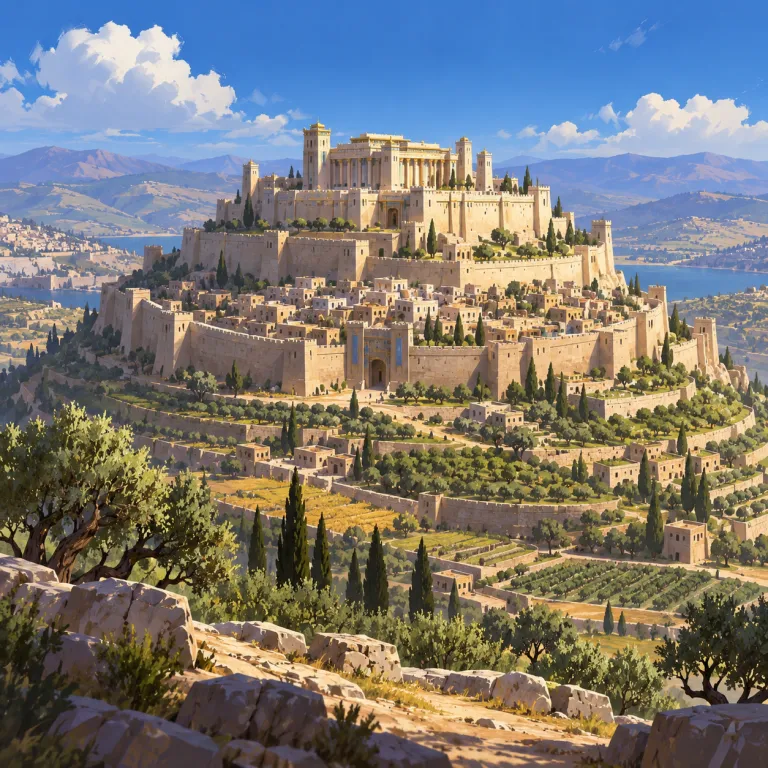
The place
Samaria, the capital city of the northern kingdom of Israel, was built by King Omri around 880 BC (1 Ki. 16:24). The city served as the royal residence and the center of political power for the northern kingdom until its fall to the Assyrians in 722 BC (2 Ki. 17:5-6). After the Assyrian conquest, the region of Samaria was repopulated with people from various parts of the Assyrian Empire (2 Ki. 17:24), who intermarried with the remaining Israelites and became known as Samaritans.
The Samaritans developed their own religious practices, which combined elements of Israelite tradition with foreign customs (2 Ki. 17:26-28). They worshipped at Mount Gerizim instead of Jerusalem (Jhn. 4:20) and accepted only the first five books of the Bible as authoritative.
In the New Testament, Jesus encountered a Samaritan woman at Jacob's well (Jhn. 4:7-26) and used a Samaritan as an example of compassion in the parable of the Good Samaritan (Luk. 10:33). The early church spread to Samaria through the ministry of Philip (Acts 8:5-25), and the apostles Peter and John later visited the region (Acts 8:14-17).
Throughout the Bible, Samaria and the Samaritans are often portrayed as being in tension with the Jews due to religious and cultural differences (Jhn. 4:9; 8:48). However, Jesus and the early church demonstrated that the gospel was meant for all people, including the Samaritans.
Where this place lies
Where the Bible names it
56 chapters, 124 verses