
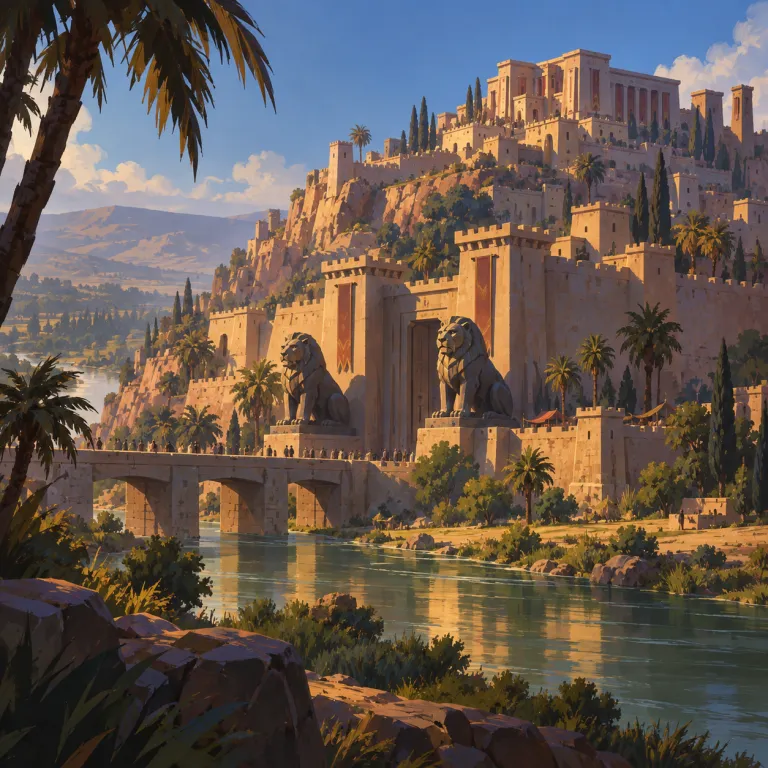
The place
Hamath, also referred to as Hamath Rabbah or Lebo-hamath, was a prominent city and kingdom located in Syria, north of Israel. It is mentioned numerous times throughout the Old Testament, often serving as a reference point for the northern extent of Israel's territory (Numbers 13:21; 34:8; Joshua 13:5; Judges 3:3; 1 Kings 8:65; 2 Chronicles 7:8; Ezekiel 47:15-17, 20; 48:1; Amos 6:14).
Hamath had its own kings, such as Toi, who sent his son Joram to congratulate David on his victories over Hadadezer (2 Samuel 8:9-10; 1 Chronicles 18:9-10). The city was known for its military strength and strategic importance, as evidenced by its mentions in the context of conflicts and conquests (2 Kings 14:28; 17:24, 30; 18:34; 19:13; Isaiah 10:9; 36:19; 37:13; Jeremiah 39:5; 49:23; 52:9, 27).
During the reigns of various Israelite kings, Hamath served as a marker of the extent of their dominion. Jeroboam II, king of Israel, is said to have restored the border of Israel from Lebo-hamath to the Sea of the Arabah (2 Kings 14:25). Solomon, known for his expansive kingdom, is described as having ruled over all the kingdoms from the Euphrates River to the land of the Philistines, as far as the border of Egypt, including Tiphsah and Gaza (1 Kings 4:21, 24).
The Assyrians conquered Hamath in the 8th century BC and deported some of its inhabitants to Samaria (2 Kings 17:24, 30). The fall of Hamath is mentioned in the prophetic oracles of Isaiah, Jeremiah, and Amos, often in the context of judgment against the city for its pride and wickedness (Isaiah 10:9; Jeremiah 49:23; Amos 6:2).
In the prophetic visions of Ezekiel, Hamath is mentioned as one of the boundaries of the restored land of Israel (Ezekiel 47:15-17, 20; 48:1), indicating its continued significance as a geographical marker.
The exact location of Hamath is believed to be near the modern-day city of Hama in western Syria, situated along the Orontes River. Its strategic location along trade routes and its proximity to Israel made it a city of great importance in the ancient Near East.
Where this place lies
Where the Bible names it
27 chapters, 34 verses